Showing posts with label wellness. Show all posts

Monday, June 9, 2014

Matcha & Maca - our newest obsessions

As we're weeding out all of the foods that are on the big fat NO list, we needed to replace them with new, healthier foods.  In doing this, we started visiting juice bars more often.  Organic Avenue and Juice Generation are my personal favorites.  I sampled a juice called Matcha Chia Glo at Organic Avenue that was absolutely amazing.  I bought one, and noticed after I drank my 14 oz of heaven that I had a ton of energy,  was full for hours, and in a great mood the rest of the day.  I did a little research on matcha to see what exactly it was and why it was giving me this wonderful reaction, and what I found has made me decide that matcha is going to be my new replacement for coffee.

Think of matcha as a super green tea.  It's a powder version of green tea from Japan that has a ton of health benefits.
1 - Energy. Matcha has much less caffeine than a cup of coffee, but provides an energy boost up to 6 hours of clean energy without jitters, and no crash afterwards.
2 - Antioxidants. In terms of antioxidants, one glass of matcha is equal to 10 glasses of regular green tea in terms of antioxidants & nutrients.
3 - EGCG. Matcha contains 137x more of the antioxidant EGCG (epigallocatechin gallate) than other types of green tea. EGCG has been proven to help fight cancer, heart disease, and HIV.

4 - Fat burning.  Matcha contains unique thermogenic properties that quadruple fat burning. What that equates to is burning 40% more calories a day just by drinking this amazing powder.  That alone makes it better than coffee.
5 - Relaxation.  Matcha contains an amino acid called L-Theanine, which promotes relaxation and well-being in the brain. Buddhist monks take matcha to help them meditate.
6 - Detoxing.  Matcha contains chlorophyll, which is supposed to detox the body and help clear out toxins, heavy metals, and poisons.

It's still really hard to find matcha in regular grocery stores or cafes.  You can get some at some Whole Foods and organic stores.  I ordered my matcha on Amazon, and the company 'Kiss Me Organics' sent me a 71 page PDF filled with recipes for different drinks and baked goods.  I'll gladly share the PDF with anyone interested, or you can buy a bag here: Matcha Tea on Amazon.  You can make a matcha latte for breakfast in place of your coffee and have more energy than taking that morning trip to Starbucks.  The places in NY that I've found matcha on the menu is currently limited to Macaron Cafe and Argo Tea.  I just learned that Starbucks' green tea latte is made with matcha, but they add a ton of sugar which defeats the purpose.  I also found one at the Coffee Beanery in the Atlanta airport, but I'm fairly certain that one also was pumped up with sugar because I couldn't sit still for my entire flight back home.  


And now on to MACA,  Back in Peru in 2009, when heading to do the Inca Trail to Machu Picchu, my friend and I learned that to cope with the 3,000 meter elevation (around 10,000 feet for those not on the metric system - I speak in meters thanks to all of my international travel!), the Incas and Quechua use coca.  No, coca leaf is not cocaine; yes, it is illegal in the US; no, there's no reason why.  I didn't love chewing on the leaves, so our lovely tour guide introduced me to coca candies.  Anything with a little added sugar (back in those days) made me ecstatic, and I lived on these little coca candies for the rest of my trip.  Two years later I found myself back in Peru, searching for my darling little coca candies.  I kept accidentally buying a different kind of candy, which the Peruvians were calling maca.  I had never heard of maca before, and embarrassingly thought I was buying the same thing but it was a different color and they were calling it by the wrong name (oops) but it tasted even better than the coca candies.  I didn't know the properties at the time, and it didn't help with the altitude sickness, but they tasted great and cost about 15 cents a bag.
Now fast-forward to 2014.  Suddenly, Caryn and I start seeing maca popping up on food labels and in our health blogs.  I remembered the name from my Peru days, and so we did a little research on this new Incan superfood.
Maca is a root in the radish family, most commonly found in powder form.  Maca has a ton of good-for-you properties:
-Rich in Vitamin B, C & E, calcium, zinc, iron, magnesium, phosphorous and amino acids.
-Energy. Known for raising energy and increasing stamina. 
-Boosts your libido, balances hormones and increases fertility. This I can't attest to fully, but I do recall having a crush on someone in Peru when I was eating these candies left and right so maybe that was a factor.  It's like a love potion!  What's kind of funny about this too, is when you find maca in drinks and smoothies at juice bars they always have names relevant to that point, like 'Get Naked' or 'Horny Gorilla'.  (Yes, these names are ridiculous, but they're sold at places like Juice Press!
-Can be known to increase fertility. So if you take this, double up on your birth control. Or have a lot of babies. Your choice.
-Good for general health. Supplies iron, restores red blood cells, keeps bones and teeth healthy, makes you heal from wounds more quickly. 
-Relieves menstrual issues - cramps, body pain, hot flashes associated with menopause, anxiety, mood swings, & depression.  I feel like any guy reading this is going to start slipping maca powder into girls' drinks. Makes them want to have sex and tone down the crazy. Win-win for everyone.
-Skin. Can help clear acne and blemishes.

It almost sounds like the Peruvians invented maca to help tourists survive the Inca Trail - I definitely could have used some extra energy to get through the 4 day hike, and quick healing properties from the dozens of bruises I came back from the hike with.

You can add maca powder to smoothies, salads, drinks and juices.  I have been putting it into my applesauce.  I found a bar at my organic store by a brand called Amrita that sells chocolate maca bars, and the bulk bins at Whole Foods sell granola-type cereal that has maca as an ingredient.  
You're supposed to use it in very small amounts, around 1/2 a teaspoon when you first start taking it, and 1 tablespoon when your body is used to it.  You're also encouraged to rotate a few days on and off, because taking it daily can throw your hormones out of whack.  They sell it in pill form too, but all the health blogs recommend taking the powder.

Feel free to send us a thank you when you're obsessed with these new additions to your diet!

Friday, June 6, 2014

The best things in life aren't (calorie) free

Yes, that also counts when it comes to calories in artificial sweetener. I know this topic has been covered a million times before. However, every time I go for a coffee with friends I still see them pouring all the fake stuff into their already sugar-laden frappuccinos. Maybe the message isn't sinking in. There's also newer products on the market now that are claiming to be healthier - so after my brother asked last night, 'what about stevia? Isn't that one better for you?' I thought this would be a natural next topic to cover.
The sugar vs artificial sugar topic is a very interesting debate - is it better to have sugar in it's pure form or some derivative of sugar?  As you can see from my first post, the right answer is, if you can avoid sugar altogether, power to you - that's the way to go.  But after years of conditioning yourself of adding packets of pastel colored sweetener to your coffee, and developing an addiction to the sweet stuff, that's going to be a hard habit to break.  I'm going to go through each of the artificial sweeteners and break out what's actually inside of them for you, and you can be the judge of which, if any, is the least of the evils.

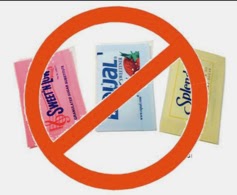
Sweet'N Low - Saccharin. The FDA actually tried to ban this back in 1977, but of course that didn't happen since it's still around and suddenly 'safe' today. Comes from a derivative of coal tar derivatives. Causes bladder cancer in rats, but claims to be totally fine for humans. I don't know how easy I find that one to believe.  Prior to 2000, saccharin was on the list of chemicals that cause cancer in humans, but the FDA removed it that year.  Since the components didn't change, I wonder what did.  I bet someone pretty senior at Cumberland.


Aspartame - Equal & Nutrasweet.  Equal is made from methanol and converts to formaldehyde when digested. Has been linked to brain tumors. Typing that just made me want to throw up all of the Weight Watchers brownies I ate back in 2005. Want to know how they discovered Equal? In an attempt to make a drug for ulcers back in the 60s. 


Splenda - Sucralose. Chlorinated sugar. Read that again please. Sugar with chlorine.  Have you ever gone swimming in a pool and decided - hey, the chemicals in this water seem really tasty? Maybe you have. If that's the case, please stop reading my blog because you're too far gone and I can't help you. The carcinogen in the sucralose is also used in pesticides, poisonous gas, plastics and disinfectants. Splenda was actually discovered in a lab when scientists were trying to make insecticides. Would you like one yellow packet of Raid or two?

Stevia - SweetLeaf, Truvia, PureVia. Comes from a plant.  That's great - except you're not eating actual stevia plant; you're using a genetically modified processed version.  For Truvia, the main component is erythritol, which has been proven to kill fruit flies exposed to the chemical in lab studies. Something that kills bugs is the main sugar substitute in Coca Cola products.  Good stuff. Other ingredients in stevia products are glycerine (found in liquid stevia extracts), natural flavors (which, in other words means - ANYTHING. What is a 'natural flavor'? Just say what it is. This is one of the biggest BS things found on a label. Then there's Xylitol, found in Truvia. Xylitol is made by hydrogenating sugar.  They use Raney nickel, which is a powdered nickel-aluminum alloy.  Heavy medal residue in your coffee.  Mmm. The last, and best part - Xylitol comes from GMO corn. So while you're running around buying things that say GMO-free on the label, you're accidentally eating it as a biproduct in your 'natural' sweetener.  Oops. There's a lot of other interesting things here about Xylitol - I won't continue on this topic, because hopefully you get the drift. But if you want to learn more, this was a great source: http://www.thehealthyhomeeconomist.com/xylitol-not-as-sweet-as-its-cracked-up-to-be/

Now one good thing with this one - stevia does lower glucose and insulin levels more than other sweeteners, so this is a better option for diabetics.  But overall, as you can see, still not great for you. Plain and simple, our bodies aren't designed to digest these products - any of them. Sugar-free sweeteners can trick the body into a state of hypoglycemia. Stevia is sweet, so your body thinks it's going to be getting sugar. It gets ready for it. Glucose is cleared from the bloodstream. Blood sugars drop, but no sugar actually arrives. Adrenaline & cortisol rise to take sugar from other places like your liver or body tissue... I'm getting too scientific here. I don't even understand what I'm writing. It's just not good what's happening internally when you eat this stuff, let's leave it at that.

Another problem with stevia is these brands are more expensive and not as readily available.  When you go to Starbucks, or any restaurant, you'll find regular sugar, and what I call the pastel trifecta - the pink Sweet N'Low, blue Equal and yellow Splenda.  Even if this is a better option, it's not there in front of you.  It's significantly more expensive (as all things better for you are), and you have to make a conscious effort to carry it around with you to add to your coffee.  

There's also the social dilemma; people think you're weird when you pull out your little packet of stevia to add to your coffee.  I don't care or mind defending my actions when it comes to food just because I have too many allergies, too many modifications and quite frankly, my health is more important than being a social pariah.  But some people don't want to feel weird or difficult, so they'll stick with what everyone else is doing.  The consistency of stevia products is a little bit strange too, and still has the problem of being overly sweet and screwing with your taste buds.

I was a huge Truvia fan once I banned all other sweeteners from my diet a few years ago, however now I have half a tub from Costco sitting on my counter that I'll never touch again.  If anyone wants some Truvia, it's up for grabs :)

All have been linked with causing migraines, tumors and depression.  Many of the studies that have claims that consuming any of these sweeteners in small doses is fine, are funded by the companies who manufacture them.  Connect the dots here for yourselves. 

The debate comes down to, if sugar is so bad for you then isn't it better to have the fake kind?  The truth is, the best things in life aren't free.  Taking out the calories and the chemical components of sugar isn't making it healthier.  Artificial sweeteners are anywhere from 200-700x sweeter than sugar, causing you to literally never feel full from any of the foods you're eating that contain them.  Ever drink a diet soda and feel starving afterwards?  You can thank the aspartame for that.  Artificial sweeteners also make you lose the taste for less sweet foods. It makes them taste bland and boring, and you need more and more of the fake stuff to taste anything at all.  I've actually noticed since cutting out these products how good foods like brussel sprouts taste (don't laugh - they're delicious!)

Another rebuttal I hear, and sorry mom and dad but I'm calling you out on this one because we debate about sweeteners ALL the time - is, if they're so bad for you, why are they everywhere?  And that's a great question, I have to say. But I'll tell you why.  Because the FDA sucks.  They approve these chemical-laden garbage-filled products because the companies behind them have billions of dollars, stamp their feet, make all sorts of threats and demands, and basically stronghold the FDA into giving the stamp of approval.  Once it's on the market, the public assumes it's fine, because it's on shelves - how can it be bad for you?  Know what else you can find in supermarkets? Cigarettes.  Next time you're grocery shopping, think of it this way - whether you put the cigarettes or the Splenda in your cart, both have a chance of giving you cancer.  Of course cancer isn't the only negative outcome.  Drinking diet drinks increase your risk of getting Type 2 diabetes by 67%.  So if you thought your chances of getting adult onset diabetes was lessened by choosing diet soda over regular, you're wrong.  The only beverage that truly has zero calories and is HEALTHY is water - anything  else contains something that has a negative impact on your body.  The most amusing part of all of this?  Studies have shown that consuming artificial sweeteners causes weight GAIN.  So great that you're cutting the 20 or 30 calories by swapping a pink or blue packet for the real thing, but you should've just eaten the extra calories and spend an extra 2 minutes on the treadmill.


It actually make me really mad that in the 2 years I was in Weight Watchers, these were the foods they were telling me to eat.  If you're hungry, have a Weight Watchers meal! Full of chemicals. Snack time? Try a fat free low calorie muffin! Only 140 calories! Because it contains a ton of aspartame. Thirsty? Don't drink your calories. Never drink your calories! That's a mantra that I still have trouble getting past today. If you're thirsty, drink water or diet coke! They actually pushed the diet coke because it 'filled you up more'. I was 23 years old, super impressionable, and really wanted to be skinny. I listened. And my body has been suffering the consequences ever since.  I'll end by saying - just make the right choices. Be educated in your decisions.  If you want to wean yourself off of sweeteners (and it's NOT EASY. It's something I'm trying to do every day) - just use something natural. Put a tiny bit of agave or raw honey into your coffee/yogurt/baked good.  Google paleo recipes, that use great substitutes and let you make healthier versions of cookies and cakes and on and on.  What I'm noticing as I'm no longer using Truvia or sugar in my coffee anymore, is I don't even want coffee anymore!  I now crave unsweetened green tea. Matcha (more to come on this amazing new discovery later).  I still function getting my caffeine from tea, and natural sources like - exercise and sleep - crazy notion, right? But every day I feel myself getting healthier and stronger and know that eventually these chemicals will be gone from my bloodstream. Hopefully they'll be gone from yours too.


Thursday, June 5, 2014

Back To Basics: A New Beginning

Hi friends, paleo followers, health enthusiasts and anyone else who may have stumbled upon us:
Welcome.  Lori and Caryn here.  We're two girls who have been invested in the health & wellness world for the past 15 or so years.  We've spent the majority of our lives trying our best to keep up with food and fitness trends, and have found that even with all of the research we do, we're learning something new every day.  We thought it would be helpful to share what we're discovering with others, so that as we continue to become the best version of ourselves, you too can learn what foods to avoid, healthy solutions, and so forth.

Let us introduce ourselves:
I'm Lori.  31, born & raised Brooklynite before being from Brooklyn was cool.  From a physical standpoint, I've been an overly active individual since about 2001.  I've been going to gyms (pretty much every gym in NY, from Dolphin to Bally's to Gold's to the Y to New York Sports Club to Equinox), doing cardio 5x a week literally since I was 18.  As the years progressed I moved into more endurance-type activities.  Began cycling in 2007, starting off with a mountain bike from Toys R Us and now complete 1-2 century (100+ mile) bike rides a year (no longer on a mountain bike).  In 2008 I got into running, and despite a plethora of injuries over the years I've managed to complete 3 half marathons and a bunch of smaller races; 5 & 10Ks over the years.  I do yoga, pilates and barre classes.  I love trying out new studios all over the city; some of my favorites are Soul Cycle, Prana Yoga and Chaise 23.  From a food sense, I've struggled with it since I was a kid.  I've always loved food, but sadly, food doesn't love me back.  I have to watch everything I eat so I don't gain weight, and I've developed allergies over the years that have caused me to move from a low-calorie to a vegetarian to a gluten-free to soy-free to now paleo diet.  It's been a hell of a journey, but what I've learned every step of it is that when it comes to  health, things change every day.  New nutritional benefits are uncovered; foods that were once thought to be healthy actually aren't; other foods that were thought were bad for you have positive effects.  It's a lot to keep up with, and Caryn and I have done a pretty good job of keeping up to speed with the evolution in nutrition and spend a lot of time (maybe too much time) wandering the aisles of Whole Foods, discovering new foods, drinks and vitamins each and every day.  For me, this blog will serve as a place to house all of this information, a place to evaluate new findings, and share with our friends and fellow health-nuts new products we find so you can enjoy them too.

I am Caryn, very similar background to Lori; ran a few marathons, biked multiple centuries, and practically live at the gym 4-5 times a week. When not at the gym  I am walking everywhere perusing the shelves of Whole Foods and any other health food market.
However I was not always this way, born and raised in SOUTH Brooklyn, growing up in the 80’s and 90’s to a family who had no idea what a “healthy” meal meant. Dinners consisted of frozen meals, jarred tomato sauces, and whatever item was on sale for the week. You could be sure our house was always stocked with Bryer’s or Edy’s ice cream along with cookies, chips, soda etc.  By some miracle I was never overweight, but was always interested in food and fitness.
By sixteen, saving my small income from my job selling pretzels at the mall I joined my first gym (back then a gym was  $15-$20 a month!!!). I lived on the elliptical machine and ignored weights like the plague. At this point I still had no idea what a vegetable was and feasted on “healthy” cereals all day 3 meals a day such as Special K, Reese Pieces cereal (for those hard days on elliptical), and whatever other sugary item I could find. At this point Lori and I met and congratulated ourselves on being so healthy, as she followed a similar routine. No one we knew even went to a gym!
 On weekends we would be very “cool” and take the B/Q train to Broadway Lafayette and walk uptown to Bloomingdales, burning  calories, and treating ourselves along the way with more sugary treats.
Then came college…Wal-Mart and Wegmans was my heaven on earth. The aisles of cereal, candy, cookies, chips--- all so much cheaper than at home!  I literally spent my first two years of college living off anything in a package, especially cereal and wheat thins (my healthy snack). I still continued to go to the gym and at this point I added salad into my diet (super healthy).
It wasn’t until my junior year that my roommate and I moved in with a bunch of people who were environmentalists and spoke of this weird term ORGANIC. My roommate and I had no idea what these “hippies” were talking about. Why would you spend more money on food because its “ORGANIC.” Who eats ORGANIC eggs and drinks ORGANIC milk… Being curious about health, my roommate and I took a class on environmental studies and learned about “ORGANIC” and why it’s better for you, and so much more (which will be discussed throughout the blog).. The class was eye opening. It began my journey to eat cleaner and healthier- and to pay attention to ingredients.
However this has been a long journey. After college “healthy” eating meant packaged dinners at Trader Joe’s  laden with soy, gluten, and god knows what else. Lori and I would meet up after work and raid TJ, then eat our meals and we both had same reaction--- stomachaches, bloating, etc.. How could this be if we were eating healthy???
As time went on, we learned more about soy, gluten, additives and continued to modify our diets, however it wasn’t until very recently (like 2 months ago) that our worlds changed by reading “It Starts With Food,” which basically outlined and scientifically proved why everything we thought was correct was hurting us… So begins our quest to share our knowledge with you!
Thanks for reading!